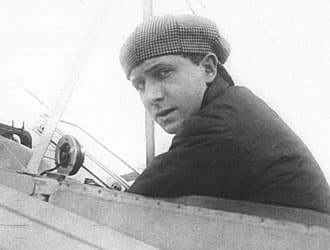
Jorge Chávez
1887–1910 · Peruvian
Aviation — early record flights
WHY YOU SHOULD KNOW THEM
First person to fly an aircraft across the Alps (September 23, 1910)
THEIR STORY
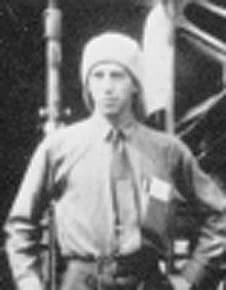
Jorge Chávez — also known as Géo Chávez — was born in Paris to Peruvian parents, making him Peruvian by heritage and nationality even though he never set foot in Peru during his short flying career. He trained at the Farman brothers' aviation school in Reims, France, and earned his pilot's license in February 1910, at the very beginning of powered aviation's history. He quickly built a record of increasingly impressive altitude flights: 1,647 meters over Blackpool, England, then 2,700 meters over Issy-les-Moulineaux, France, both in 1910. But his defining achievement came on September 23, 1910: flying a fragile Blériot XI monoplane, he took off from Brig, Switzerland, and flew through the Simplon Pass — a genuine mountain pass through the Alps — landing in Domodossola, Italy, after a 51-minute flight. It was the first time anyone had flown an aircraft across the Alps, a feat many considered close to impossible given the mountains' altitude, unpredictable winds, and the complete absence of weather forecasting or radio communication at the time. He reportedly told people beforehand, "Whatever happens, I shall be found on the other side of the Alps." He crashed on landing at Domodossola and died four days later from his injuries, on September 27, 1910. His reported final words — "Arriba, siempre arriba, hasta las estrellas" ("Higher, always higher, until the stars") — became a lasting part of his legacy. Lima's international airport, Jorge Chávez International Airport, is named in his honor, and his remains were repatriated to Peru in 1957, decades after his death in Italy.
WHAT THEY ACTUALLY DID
Chávez flew an early, structurally fragile monoplane through a genuine high-altitude mountain pass with no weather forecasting, no radio, and minimal margin for engine failure — a flight that required real skill and real risk tolerance with almost none of the safety tools pilots rely on today.
WHAT YOU'RE LEARNING THAT CONNECTS
His fatal landing crash, following a technically successful flight, is a sober reminder that the landing phase of any flight carries real risk even after the hardest technical challenge has already been overcome.
DID YOU KNOW?
He was born in Paris to Peruvian parents and never set foot in Peru during his flying career.Lima's international airport, Jorge Chávez International Airport, is named in his honor.
SOURCES
Wikipedia
Photo: Unknown authorUnknown author · Public domain · Source