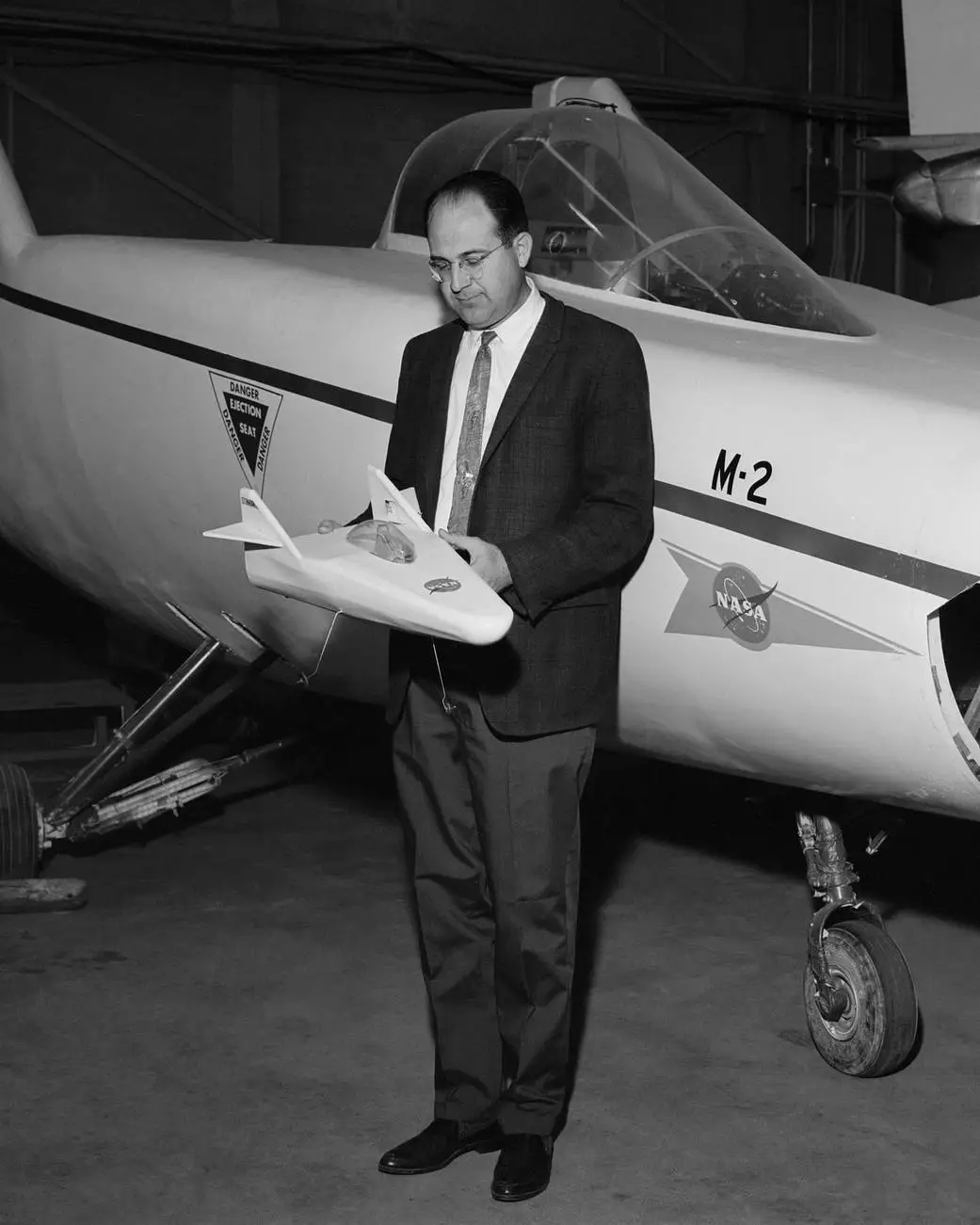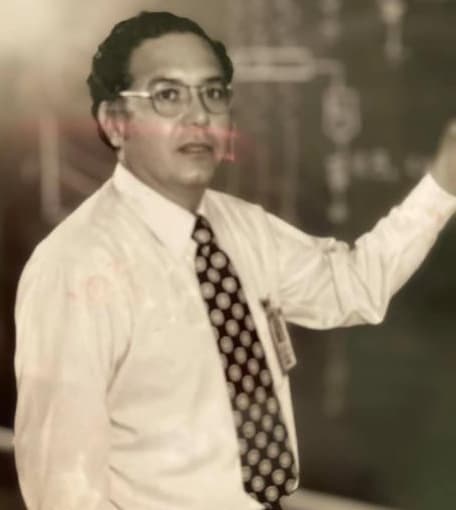
Arturo Campos
1934–2001 · Mexican-American
Aerospace electrical engineering
WHY YOU SHOULD KNOW THEM
Led the emergency power-transfer procedure that helped save the Apollo 13 crew after their spacecraft's oxygen tank exploded
THEIR STORY
Arturo Campos grew up in Laredo, Texas, the son of an auto mechanic — a household where hands-on technical work was already part of daily life. He graduated from Martin High School in 1952, attended Laredo Junior College, and earned a bachelor's degree in Electrical Engineering from the University of Texas in 1956. Before NASA, he supervised aircraft maintenance as a civilian employee at Kelly Air Force Base, work that put him close to real flight hardware years before he ever touched a spacecraft. He joined NASA's Johnson Space Center in the early 1960s and became the electrical power subsystem manager for the Apollo Lunar Module — including the module flown on Apollo 11. That job meant understanding, in complete technical detail, exactly how the spacecraft generated, stored, and distributed electrical power to every system aboard. That knowledge became critical on April 13, 1970. An oxygen tank exploded aboard Apollo 13, roughly 200,000 miles from Earth, crippling the spacecraft's main power and life-support systems. Campos headed the Mission Evaluation Room's response, taking a contingency power-transfer procedure that had actually been drafted a year earlier — for a scenario nobody expected to actually happen — and adapting it in real time over roughly 15 hours to reroute battery power from the lunar module into the command module, the only way the crew could have enough power for reentry. In his own words: "When they called me up, I rewrote the plan on the spot." That work was a direct, documented factor in getting all three astronauts home alive. Campos retired from NASA in 1980 and worked afterward as an electrical engineering consultant in Houston. He also founded and served as the first president of LULAC Council 660, a local chapter of the League of United Latin American Citizens made up of Mexican-American engineers at NASA, using his position to advocate for more Hispanic recruitment into the space program. He received the Presidential Medal of Freedom in 1970 alongside the rest of the Apollo 13 Mission Control team. He died in 2001. In 2022, NASA named the Artemis I test mannequin "Commander Moonikin Campos" in his honor — a lasting tribute from the agency he'd helped save a mission for decades earlier.
WHAT THEY ACTUALLY DID
As the electrical power subsystem manager, Campos was responsible for the wiring, batteries, and power-distribution systems that kept the Lunar Module's instruments and life support running; during the Apollo 13 crisis, his specific contribution was figuring out exactly how to safely reroute a dying power supply between two spacecraft systems that were never designed to share power that way, under extreme time pressure with lives depending on getting it right.
WHAT YOU'RE LEARNING THAT CONNECTS
Campos's work is a real, dramatic example of what an aircraft or spacecraft electrical systems engineer actually does — not just designing a system that works normally, but understanding it well enough to improvise a survival plan when it doesn't.
DID YOU KNOW?
NASA named the Artemis I test mannequin "Commander Moonikin Campos" in his honor in 2022.He founded LULAC Council 660, a chapter for Mexican-American engineers at NASA, to advocate for more Hispanic recruitment into the space program.
A NOTE ON HISTORICAL UNCERTAINTY
The 1995 film Apollo 13 did not depict Campos as a named character the way it dramatized some other roles — the account here is drawn from NASA's own documented history, not the film's dramatization.
SOURCES
NASA: "Arturo Campos: A Key Player in Bringing Apollo 13 Home"; Smithsonian Magazine
Photo: NASA · Public domain · Source