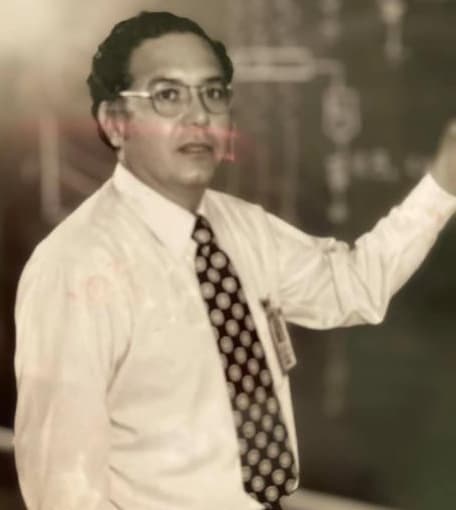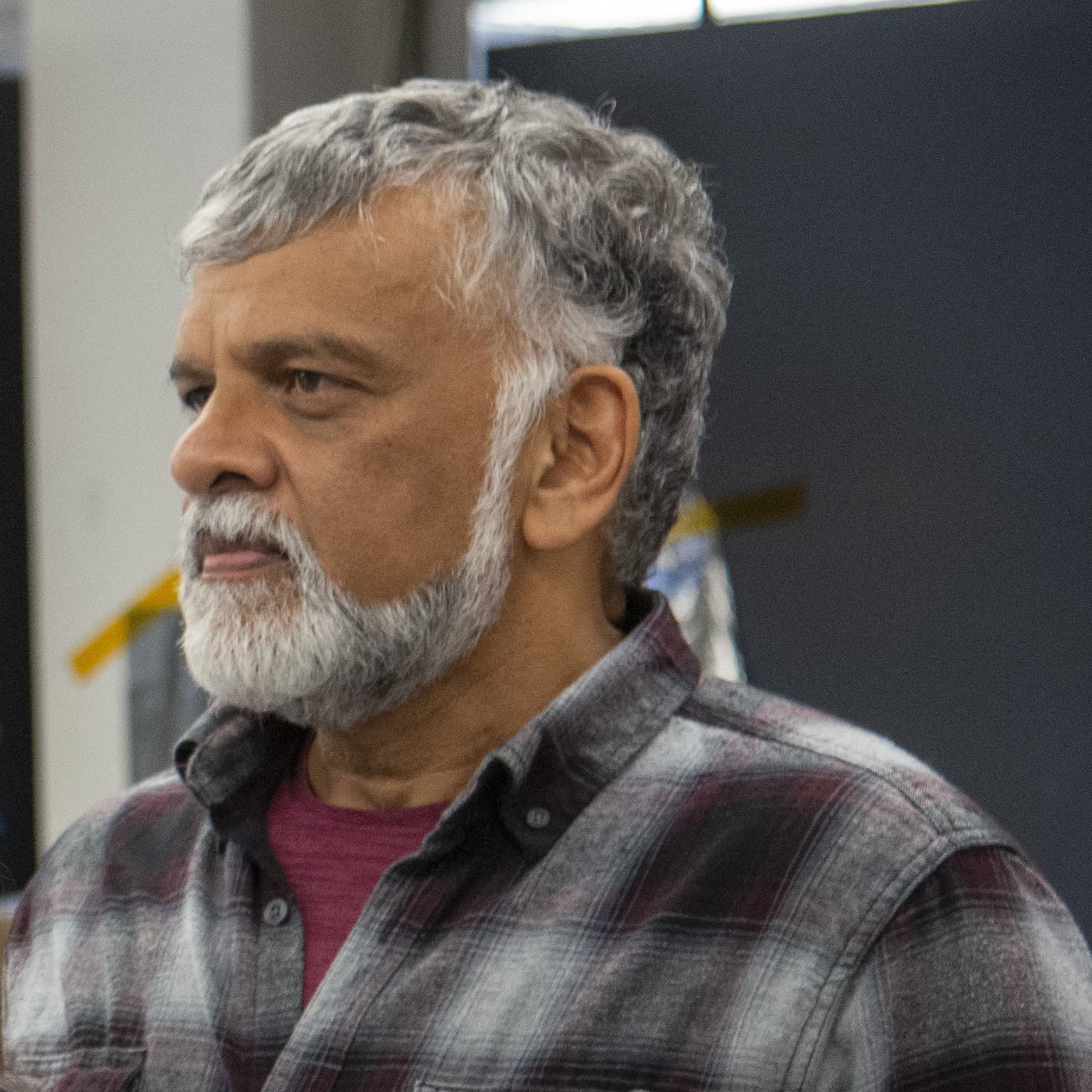
J. "Bob" Balaram
b. 1959 · Indian-American
Aerospace engineering — rotorcraft
WHY YOU SHOULD KNOW THEM
Chief engineer of NASA's Ingenuity Mars helicopter, which achieved the first powered, controlled flight on another planet (April 19, 2021)
THEIR STORY
J. "Bob" Balaram, born in South India, studied at the Indian Institute of Technology Madras — one of India's most competitive engineering institutions — before building his career at NASA's Jet Propulsion Laboratory, which he joined in 1986. His defining achievement came decades into that career: as chief engineer of the Ingenuity Mars helicopter project, Balaram led the technical design of an aircraft that had to solve an extraordinary engineering problem. Mars's atmosphere is roughly 1% the density of Earth's — meaning a rotorcraft there needs rotors spinning dramatically faster, on a dramatically lighter aircraft, than anything that flies on Earth, all while operating autonomously across a 15-to-20-minute communication delay from Earth that makes real-time piloting from the ground physically impossible. On April 19, 2021, Ingenuity achieved the first powered, controlled flight ever completed on another planet — a genuine historic first in the full history of flight itself, not just a NASA milestone. The helicopter, designed for a five-flight test campaign, went on to fly far beyond that original goal before its mission ended in 2024. Balaram's engineering work is directly responsible for solving the specific aerodynamic and autonomy problems that made this first extraterrestrial flight possible at all.
WHAT THEY ACTUALLY DID
As chief engineer, Balaram solved real, extraordinarily difficult aerodynamic problems — designing rotors and a flight system that could generate enough lift in an atmosphere 1% as dense as Earth's, operating with full autonomy across a communication delay too long for real-time piloting.
WHAT YOU'RE LEARNING THAT CONNECTS
Ingenuity's need to overcome Mars's extremely thin atmosphere is a dramatic, real-world extension of the same lift and air-density concepts covered in aerodynamics lessons — the same physics, taken to an extreme most students never consider.
DID YOU KNOW?
Mars's atmosphere is roughly 1% as dense as Earth's, meaning Ingenuity's rotors had to spin dramatically faster than any helicopter rotor on Earth to generate enough lift.Ingenuity was designed for just five test flights but flew far beyond that goal before its mission ended in 2024.
SOURCES
Wikipedia; NASA APPEL podcast
Photo: NASA/JPL-Caltech · Public domain · Source